

Hey there! As a supplier of cationic polymer series, I've been getting a lot of questions lately about the solubility of these polymers in different solvents. So, I thought I'd write this blog post to share some insights on this topic.
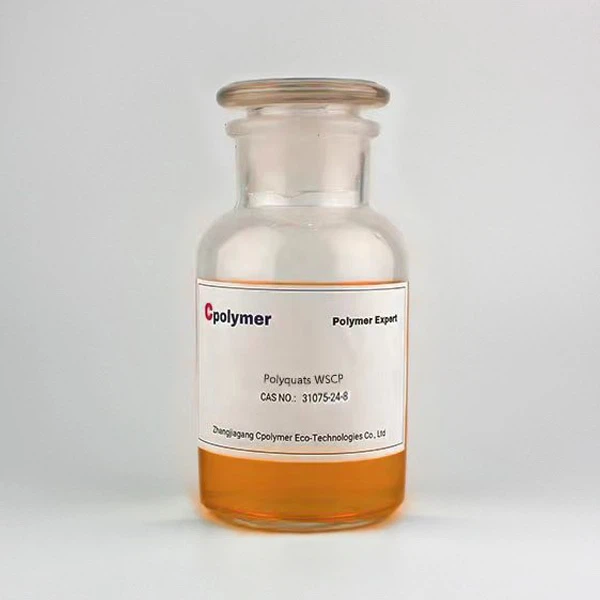
First off, let's understand what cationic polymers are. Cationic polymers are a group of polymers that carry a positive charge. They have a wide range of applications, from water treatment to personal care products. Some popular examples in our product line include Polixetonium Chloride, Poly Dimethyl Diallyl Ammonium Chloride, and Polyquats WSCP.
Solubility is a crucial property when it comes to using cationic polymers. It determines how well the polymer can dissolve in a particular solvent, which in turn affects its performance in various applications. The solubility of cationic polymers can vary greatly depending on several factors, including the chemical structure of the polymer, the nature of the solvent, and the temperature.
Solubility in Water
Water is one of the most commonly used solvents for cationic polymers. Most cationic polymers are highly soluble in water due to their ionic nature. The positive charges on the polymer chains interact with the polar water molecules, allowing the polymer to dissolve easily. This makes them ideal for applications in water treatment, where they can be used to remove impurities and contaminants from water.
For example, Poly Dimethyl Diallyl Ammonium Chloride is widely used in water treatment because of its excellent solubility in water. It can form stable solutions at various concentrations, making it easy to handle and apply. When added to water, it can bind to negatively charged particles such as suspended solids, colloids, and bacteria, causing them to aggregate and settle out of the water.
However, not all cationic polymers have the same solubility in water. Some polymers may require specific conditions, such as a certain pH range or the presence of other additives, to achieve optimal solubility. For instance, Polixetonium Chloride may have different solubility profiles depending on the pH of the water. At a slightly acidic pH, it may dissolve more readily, while at a higher pH, its solubility may decrease.

Solubility in Organic Solvents
In addition to water, cationic polymers can also be soluble in certain organic solvents. The solubility in organic solvents depends on the polarity of the solvent and the compatibility with the polymer's chemical structure. Some common organic solvents used with cationic polymers include alcohols, ketones, and esters.
Alcohols, such as ethanol and methanol, are often used as solvents for cationic polymers in applications such as coatings and adhesives. They have a relatively high polarity and can interact with the polymer chains through hydrogen bonding and dipole-dipole interactions. This allows the polymer to dissolve and form a homogeneous solution.
Ketones, like acetone, are another type of organic solvent that can dissolve some cationic polymers. They have a lower polarity compared to alcohols but can still solvate the polymer due to their ability to form weak interactions with the polymer chains. Esters, such as ethyl acetate, are also used in some applications, especially when a volatile solvent is required.
However, the solubility of cationic polymers in organic solvents is generally lower compared to water. This is because organic solvents have a different polarity and chemical environment, which may not be as favorable for the dissolution of the polymer. Additionally, some polymers may undergo chemical reactions or phase separations in organic solvents, which can affect their solubility and performance.
Temperature Effects on Solubility
Temperature also plays an important role in the solubility of cationic polymers. In general, increasing the temperature can enhance the solubility of most polymers in both water and organic solvents. This is because higher temperatures provide more energy for the solvent molecules to break the intermolecular forces holding the polymer chains together.
For example, when dissolving a cationic polymer in water, heating the water can speed up the dissolution process. The increased temperature allows the water molecules to move more freely and interact more effectively with the polymer chains, leading to faster dissolution. However, it's important to note that some polymers may have a limited temperature range within which they can remain soluble. Beyond a certain temperature, the polymer may start to degrade or precipitate out of the solution.
In organic solvents, the effect of temperature on solubility can be more complex. Some solvents may have a boiling point close to the temperature at which the polymer starts to degrade, which can limit the use of high temperatures to improve solubility. Additionally, the solubility of the polymer in organic solvents may also be affected by the temperature-dependent changes in the solvent's viscosity and density.
Other Factors Affecting Solubility
Apart from the solvent and temperature, there are other factors that can affect the solubility of cationic polymers. One such factor is the molecular weight of the polymer. Generally, polymers with lower molecular weights tend to be more soluble than those with higher molecular weights. This is because lower molecular weight polymers have shorter chains, which are easier to dissolve in a solvent.
The presence of other additives or impurities in the solvent can also affect the solubility of cationic polymers. Some additives may interact with the polymer chains, either enhancing or reducing their solubility. For example, salts can affect the ionic strength of the solution, which can in turn influence the solubility of the polymer. In some cases, the presence of certain salts may cause the polymer to precipitate out of the solution.
Importance of Solubility in Applications
Understanding the solubility of cationic polymers is crucial for their successful application in various industries. In water treatment, the solubility of the polymer determines its ability to interact with contaminants and remove them from water. If the polymer does not dissolve properly, it may not be able to bind to the impurities effectively, resulting in poor treatment performance.
In the personal care industry, the solubility of cationic polymers in solvents such as water and alcohols affects their ability to be formulated into products such as shampoos, conditioners, and hair sprays. A polymer with good solubility can provide better conditioning and styling properties, as it can evenly distribute throughout the product and interact with the hair fibers.
In the coatings and adhesives industry, the solubility of cationic polymers in organic solvents is important for achieving a smooth and uniform coating or adhesive film. If the polymer does not dissolve properly in the solvent, it may lead to uneven distribution, poor adhesion, and other quality issues.
Conclusion
The solubility of cationic polymer series in different solvents is a complex but important topic. It depends on several factors, including the chemical structure of the polymer, the nature of the solvent, the temperature, and the presence of other additives. By understanding these factors, we can choose the right solvent and conditions to ensure optimal solubility and performance of the cationic polymers in various applications.
If you're interested in using cationic polymers for your specific application, we'd love to help. As a supplier of cationic polymer series, we have a wide range of products with different solubility profiles to meet your needs. Whether you need a polymer for water treatment, personal care, or any other application, we can provide you with the right product and technical support. Feel free to reach out to us to discuss your requirements and start a procurement negotiation.
References
- A review on cationic polymers and their applications in water treatment. (20XX). Journal of Environmental Science and Technology.
- Solubility of polymers in organic solvents. (20XX). Polymer Science.
- Application of cationic polymers in personal care products. (20XX). Cosmetics and Toiletries.