

What's up, everyone! I'm in the polyamine supply business, and today, I wanna chat about the normal level of polyamines in the human body. Polyamines are these super important organic compounds that play a bunch of key roles in our bodies.
Let's start with a bit of background. Polyamines, like putrescine, spermidine, and spermine, are found in almost every living cell. They're involved in processes like cell growth, DNA synthesis, and gene regulation. You can think of them as the little workers in our body's factory, keeping everything running smoothly.
Now, the normal levels of polyamines can vary depending on a few factors. Age is one biggie. In infants and children, polyamine levels are generally higher because their bodies are growing and developing like crazy. As we get older, these levels tend to drop a bit. For example, in newborns, the levels of spermidine and spermine are much higher compared to adults. This is because their cells are dividing rapidly to form new tissues and organs.
Another factor that can affect polyamine levels is our diet. Foods like meat, fish, and some fruits and vegetables are rich in polyamines. If you're someone who eats a lot of these foods, your polyamine levels might be on the higher side. On the other hand, if your diet is lacking in polyamine - rich foods, your levels could be lower.
When it comes to the actual numbers, it's a bit tricky because different studies have reported slightly different normal ranges. But generally speaking, in healthy adults, the plasma concentration of putrescine is around 0.1 - 1 μmol/L, spermidine is about 0.5 - 2 μmol/L, and spermine is around 0.2 - 1 μmol/L. These values can give us a rough idea of what's considered normal, but it's important to remember that there's a natural variation among individuals.
Abnormal polyamine levels can be a sign of certain health conditions. For instance, elevated polyamine levels have been linked to cancer. Tumor cells often have a higher demand for polyamines to support their rapid growth and division. So, doctors sometimes use polyamine levels as a biomarker to detect and monitor cancer. On the flip side, low polyamine levels can be associated with some neurodegenerative diseases. Polyamines are thought to have a protective effect on nerve cells, and a deficiency might contribute to the development of these conditions.
As a polyamine supplier, I'm well - aware of the importance of these compounds, not just in the human body but also in various industrial applications. We offer a wide range of polyamine products, including Poly Dimethyl Diallyl Ammonium Chloride, Polyquats WSCP, and Polyamine. These products are used in water treatment, paper manufacturing, and even in some personal care products.
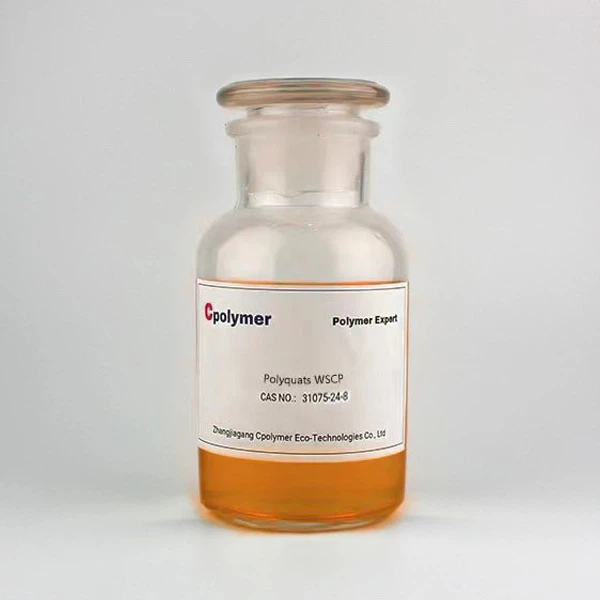

In water treatment, polyamines act as coagulants and flocculants. They help to remove impurities and suspended particles from water, making it cleaner and safer to use. In the paper industry, they're used to improve the strength and quality of paper. And in personal care products, polyamines can help with things like hair conditioning and skin moisturizing.
If you're in the market for high - quality polyamine products, whether it's for research purposes to study the role of polyamines in the human body or for industrial applications, we've got you covered. Our products are made with the highest standards of quality and purity, ensuring that you get the best results.
We understand that every customer has different needs, so we offer customized solutions. Whether you need a specific grade of polyamine or a particular quantity, we can work with you to meet your requirements. Our team of experts is always on hand to provide technical support and advice.
So, if you're interested in learning more about our polyamine products or have any questions about polyamines in general, don't hesitate to reach out. We're here to help you with all your polyamine needs. Whether you're a scientist, a manufacturer, or just someone curious about these amazing compounds, we'd love to have a chat with you.
In conclusion, polyamines are fascinating compounds with a crucial role in the human body and a wide range of industrial applications. Knowing the normal levels of polyamines in our bodies can give us insights into our health, and having access to high - quality polyamine products can open up new possibilities in various industries.
References
- Tabor CW, Tabor HM. Polyamines in microorganisms. Microbiol Rev. 1985;49(1):81 - 99.
- Pegg AE. Mammalian polyamine metabolism and function. IUBMB Life. 2009;61(1):88 - 99.
- Casero RA Jr, Marton LJ. Polyamines and cancer: old molecules, new understanding. Nat Rev Cancer. 2007;7(11):811 - 824.