

Hey there! As a supplier of cationic polymer series, I've got a ton to share about their biocompatibility properties. Biocompatibility is super important when it comes to polymers, especially in applications where they interact with living organisms. Let's dive right in and explore what makes our cationic polymer series stand out in terms of biocompatibility.
First off, what exactly is biocompatibility? In simple terms, it's how well a material can co - exist with living tissues without causing any adverse effects. For cationic polymers, this means they need to be able to interact with biological systems like cells, proteins, and tissues without triggering an immune response or causing toxicity.
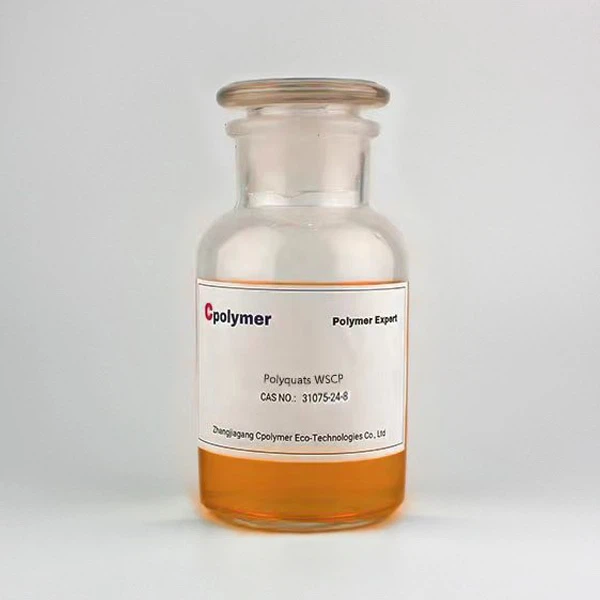
One of the key cationic polymers in our series is Polyquats WSCP. This polymer has some really interesting biocompatibility features. Polyquats WSCP has a unique chemical structure that allows it to interact gently with biological membranes. When it comes into contact with cells, it doesn't disrupt the cell membrane integrity. Instead, it can form a kind of protective layer on the surface of the cells. This is crucial in applications such as drug delivery systems. In drug delivery, you want the polymer to carry the drug safely to the target cells without harming them. Polyquats WSCP can do just that. It can encapsulate the drug and release it in a controlled manner, all while being well - tolerated by the cells.
Another great thing about Polyquats WSCP is its ability to interact with proteins. In biological systems, proteins play a vital role in almost every function. Polyquats WSCP can bind to proteins in a non - denaturing way. This means that it doesn't change the structure and function of the proteins. In fact, it can sometimes even enhance the stability of the proteins. This property is useful in biotechnological applications where maintaining the activity of proteins is essential.

Now, let's talk about Poly Dimethyl Diallyl Ammonium Chloride. This polymer is known for its high charge density. The positive charges on the polymer chains give it unique biocompatibility characteristics. In the human body, many biological molecules have negative charges. Poly Dimethyl Diallyl Ammonium Chloride can interact with these negatively - charged molecules through electrostatic forces.
In tissue engineering, for example, this polymer can be used to create scaffolds. The electrostatic interactions between the polymer and the extracellular matrix components help in cell adhesion and proliferation. Cells can attach to the polymer - based scaffolds easily, and they can grow and differentiate normally. This shows that Poly Dimethyl Diallyl Ammonium Chloride is biocompatible with the cells in the tissue engineering environment.
Moreover, in water treatment applications where this polymer is used to remove impurities, it also shows good biocompatibility. When the treated water is released into the environment or used in processes where it may come into contact with living organisms, the polymer doesn't cause any significant harm. It breaks down slowly and doesn't accumulate in the environment, which is an important aspect of biocompatibility from an ecological perspective.
Next up is Poly Allylamine Hydrochloride. This polymer has a relatively simple chemical structure, but it has some powerful biocompatibility properties. It can penetrate the cell membrane to some extent without causing cell death. This property makes it useful in gene delivery systems.
In gene delivery, the goal is to get the genetic material into the cells. Poly Allylamine Hydrochloride can complex with the DNA or RNA molecules and carry them into the cells. Once inside the cells, it doesn't interfere with the normal cellular processes. It can release the genetic material at the right time, allowing the cells to express the desired genes.
Another aspect of its biocompatibility is its low immunogenicity. The immune system of the body is designed to recognize and attack foreign substances. Poly Allylamine Hydrochloride doesn't trigger a strong immune response. This is very important because if the immune system attacks the polymer - gene complex, the gene delivery process will fail.
However, it's important to note that the biocompatibility of these cationic polymers can also be affected by various factors. The molecular weight of the polymer is one such factor. Generally, polymers with lower molecular weights tend to be more biocompatible because they can be more easily metabolized and excreted from the body. The concentration of the polymer also matters. At high concentrations, even biocompatible polymers can cause some toxicity. So, it's crucial to optimize these parameters in different applications.
The surface properties of the polymers also play a role. If the polymer surface is too hydrophobic, it may cause protein adsorption and aggregation, which can lead to an immune response. On the other hand, a more hydrophilic surface can reduce these problems and improve biocompatibility.
In addition to these physical and chemical factors, the biological environment also affects biocompatibility. For example, the pH and temperature of the surrounding environment can change the behavior of the polymers. In the human body, different tissues have different pH values. The cationic polymers need to be stable and biocompatible under these varying conditions.
Overall, our cationic polymer series offers a wide range of biocompatibility properties that make them suitable for various applications. Whether it's in the field of medicine, biotechnology, or environmental science, these polymers can play an important role.
If you're interested in using our cationic polymer series for your projects, I encourage you to reach out to us for a detailed discussion. We can help you choose the right polymer based on your specific requirements and ensure that you get the best performance in terms of biocompatibility and functionality. Let's work together to make your projects a success!
References
- Langer, R., & Tirrell, D. A. (2004). Designing materials for biology and medicine. Nature, 428(6982), 487 - 492.
- Ratner, B. D., Hoffman, A. S., Schoen, F. J., & Lemons, J. E. (Eds.). (2004). Biomaterials science: An introduction to materials in medicine. Elsevier.
- Hennink, W. E., & van Nostrum, C. F. (2002). Novel crosslinking methods to design hydrogels. Advanced drug delivery reviews, 54(1), 13 - 36.