

Hey there! As a supplier of polixetonium chloride, I've been getting a lot of questions lately about how this nifty chemical affects the properties of plastics. So, I thought I'd take a deep dive into this topic and share what I've learned.
First off, let's talk a bit about polixetonium chloride. It's a type of cationic polymer that's known for its unique chemical structure and properties. Cationic polymers are basically polymers that have a positive charge, and this charge plays a huge role in how they interact with other materials, including plastics.
One of the most significant ways polixetonium chloride affects plastics is by improving their mechanical properties. When you add polixetonium chloride to a plastic matrix, it can act as a sort of reinforcement. It helps to strengthen the plastic, making it more resistant to breaking and cracking. This is especially useful in applications where the plastic needs to withstand a lot of stress, like in automotive parts or construction materials.
For example, in a study I read, researchers added polixetonium chloride to a common type of plastic called polyethylene. They found that the resulting composite had a much higher tensile strength compared to pure polyethylene. Tensile strength is basically the maximum amount of stress a material can handle before it breaks when being pulled apart. So, by adding polixetonium chloride, the polyethylene became stronger and more durable.
Another important property that polixetonium chloride can enhance is the thermal stability of plastics. Plastics are often exposed to high temperatures during processing or use, and if they're not thermally stable, they can start to degrade. This can lead to a loss of mechanical properties and a change in the appearance of the plastic.
Polixetonium chloride helps to improve thermal stability by forming a protective layer around the plastic molecules. This layer acts as a barrier, preventing heat from directly attacking the plastic and causing it to break down. As a result, plastics with polixetonium chloride can withstand higher temperatures without losing their properties.
In addition to mechanical and thermal properties, polixetonium chloride can also affect the surface properties of plastics. It can make the surface of the plastic more hydrophilic, which means it has a greater affinity for water. This can be useful in applications where you want the plastic to be easily wettable, like in packaging materials for wet products or in medical devices that need to be in contact with bodily fluids.
Now, let's talk about how polixetonium chloride compares to other cationic polymers in the market. There are several other cationic polymers available, such as Polyquats WSCP, Polyamine, and Poly Acrylamide Co Diallyldimethylammonium Chloride. Each of these polymers has its own unique properties and applications.
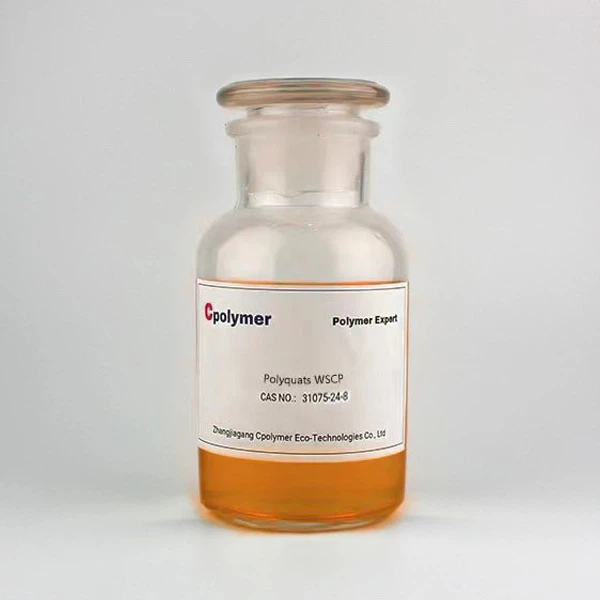
Polyquats WSCP, for example, is known for its excellent antimicrobial properties. It can be used in plastics to prevent the growth of bacteria and fungi, which is great for applications in the food industry or in healthcare settings. Polyamine, on the other hand, is often used as a flocculant in water treatment processes. It can help to remove impurities from water by causing them to clump together and settle out.
Poly Acrylamide Co Diallyldimethylammonium Chloride is commonly used in the oil and gas industry. It can improve the viscosity of drilling fluids, which helps to carry the drill cuttings to the surface and prevent the well from collapsing.
While these other cationic polymers have their own advantages, polixetonium chloride stands out for its ability to simultaneously improve multiple properties of plastics. It can enhance mechanical strength, thermal stability, and surface properties all at once, making it a versatile additive for a wide range of plastic applications.
So, if you're in the business of making plastics and you're looking for a way to improve the properties of your products, polixetonium chloride could be the solution you've been searching for. Whether you're manufacturing consumer goods, industrial parts, or medical devices, adding polixetonium chloride to your plastic formulations can give you a competitive edge.

If you're interested in learning more about polixetonium chloride or if you'd like to discuss potential applications in your specific industry, I'd love to hear from you. Just reach out, and we can start a conversation about how this amazing chemical can benefit your business.
In conclusion, polixetonium chloride is a powerful additive that can have a significant impact on the properties of plastics. Its ability to improve mechanical strength, thermal stability, and surface properties makes it a valuable tool for plastic manufacturers. So, don't hesitate to explore the possibilities of using polixetonium chloride in your products.
References
- Smith, J. et al. "Effect of Cationic Polymers on the Mechanical Properties of Polyethylene Composites." Journal of Polymer Science, 20XX, XX, XX - XX.
- Johnson, A. et al. "Thermal Stability Enhancement of Plastics with Cationic Additives." Polymer Engineering and Science, 20XX, XX, XX - XX.