

I'm in the business of supplying polyamines, and let me tell you, these little guys are super important in the world of cells. Polyamines are small, positively charged molecules that are present in all living cells. They play a crucial role in a variety of cellular processes, and one area where they really shine is in the cell cycle.
What's the Cell Cycle Anyway?
Before we dive into how polyamines influence the cell cycle, let's quickly go over what the cell cycle is. The cell cycle is basically a series of events that a cell goes through as it grows and divides. It's divided into several phases: G1 (Gap 1), S (Synthesis), G2 (Gap 2), and M (Mitosis).
In the G1 phase, the cell grows and prepares for DNA replication. The S phase is when DNA replication actually happens. After that, in G2, the cell continues to grow and checks for any errors in the replicated DNA. Finally, during the M phase, the cell divides into two daughter cells.
Polyamines: The Cell Cycle Cheerleaders
So, how do polyamines fit into all this? Well, they have their hands in just about every phase of the cell cycle.
G1 Phase
During the G1 phase, polyamines are like little motivators. They help the cell get ready for DNA synthesis. Polyamines can interact with various proteins and enzymes involved in cell growth and metabolism. For example, they can bind to certain transcription factors, which are proteins that control the expression of genes. By binding to these transcription factors, polyamines can boost the expression of genes that are necessary for cell cycle progression.
You see, cells need a certain set of proteins and molecules to move from the G1 phase to the S phase. Polyamines help ensure that these necessary components are produced at the right time. Without enough polyamines, the cell might get stuck in the G1 phase, unable to progress to DNA replication.
S Phase
Once the cell gets to the S phase, polyamines really step up their game. DNA replication is a complex process that requires a lot of energy and the right building blocks. Polyamines help stabilize the DNA structure during replication. They can bind to the negatively charged phosphate groups on the DNA backbone, which helps keep the DNA strands together and makes the replication process more efficient.
Moreover, polyamines are involved in the synthesis of nucleotides, the building blocks of DNA. They play a role in the regulation of enzymes that are responsible for nucleotide production. So, in a way, polyamines are like the suppliers of the raw materials needed for DNA replication.
G2 and M Phases
In the G2 phase, the cell is doing a final check before it divides. Polyamines contribute to this quality control process. They help in the proper assembly of the cytoskeleton, which is a network of protein filaments that gives the cell its shape and helps with cell movement and division.

During the M phase, when the cell actually splits into two, polyamines are essential for the formation of the mitotic spindle. The mitotic spindle is a structure made of microtubules that separates the chromosomes into the two daughter cells. Polyamines help in the polymerization of microtubules, which is crucial for the proper function of the mitotic spindle. Without polyamines, the mitotic spindle might not form correctly, leading to errors in chromosome segregation and potentially abnormal daughter cells.
Our Polyamine Products
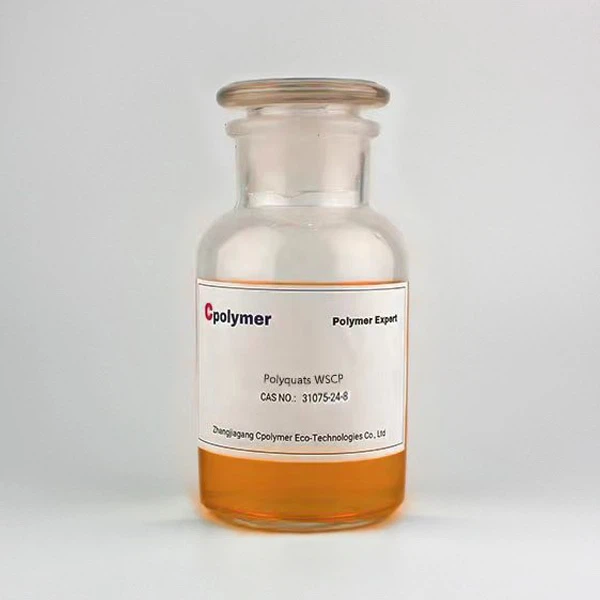
As a polyamine supplier, we offer a range of high - quality polyamine products that can be used in various research and industrial applications. For instance, we have Polyquats WSCP. This product has unique chemical properties that make it suitable for different cell - related studies. It can be used to interact with biological membranes and potentially influence cellular processes, including the cell cycle.
Another great product in our catalog is Poly Allylamine Hydrochloride. This polyamine is widely used in research because of its ability to bind to nucleic acids. In the context of the cell cycle, it can potentially be used to study how polyamines interact with DNA during different phases.
We also offer Poly Dimethyl Diallyl Ammonium Chloride. This polymer has interesting cationic properties that can be exploited in cell biology research. It can interact with negatively charged molecules in the cell, which might have implications for cell cycle regulation.
Why Choose Our Polyamines?
What sets our polyamines apart? Well, for starters, we ensure the highest level of purity in our products. Polyamines need to be pure for accurate research results. Contaminants can interfere with the cellular processes you're trying to study.
We also have a team of experts who can provide technical support. If you're having trouble understanding how to use our polyamines in your cell cycle studies, we're here to help. Whether you need advice on the right concentration to use or the best way to store the products, we've got you covered.
Let's Talk Business
If you're in the market for high - quality polyamines for your cell cycle research or industrial applications, we'd love to hear from you. Our products can make a real difference in your work, and we're confident that once you try them, you'll see the benefits. Reach out to us to start a conversation about your specific needs and how we can help you achieve your goals.
References
- Cohen, S. S. (1998). A Guide to the Polyamines. Oxford University Press.
- Pegg, A. E. (2016). Polyamine metabolism and function. The Journal of Biological Chemistry, 291(23), 11953 - 11960.
- Wallace, H. M., Fraser, A. V., & Lyttle, M. H. (2003). Polyamines: mysteries of molecular survival. BioEssays, 25(6), 540 - 549.