

As a supplier of polixetonium chloride, I've been frequently asked about its potential applications in the paper industry. This prompts me to delve into a comprehensive exploration of whether this chemical can find a niche in the complex world of paper manufacturing.
Understanding Polixetonium Chloride
Polixetonium chloride belongs to the family of cationic polymers. Cationic polymers are known for their positive charge, which gives them unique properties and makes them useful in various industries. Polixetonium chloride, specifically, is characterized by its excellent solubility in water and its ability to form strong interactions with negatively - charged substances.
Chemical Structure and Properties
The chemical structure of polixetonium chloride consists of repeating units that carry a positive charge. This positive charge allows it to interact with negatively - charged particles such as cellulose fibers, which are the primary component of paper. In addition, it has good stability under a wide range of pH conditions, which is an important factor in industrial applications.
General Applications
In other industries, polixetonium chloride has found uses in water treatment, personal care products, and as a flocculant in the mining industry. In water treatment, it helps in removing suspended solids and impurities by causing them to aggregate and settle. In personal care products, it can be used as a conditioning agent due to its ability to interact with hair and skin.
The Paper Industry: A Complex Ecosystem
The paper industry is a multi - faceted sector that involves several processes, including pulping, papermaking, and paper finishing. Each process has its own set of requirements and challenges, and the use of chemicals plays a crucial role in optimizing these processes.
Pulping Process
The pulping process is the first step in paper production, where wood chips or other fibrous materials are broken down into pulp. Chemicals are used to break the bonds between the cellulose fibers and the lignin, which holds the fibers together. The goal is to obtain a high - quality pulp with good strength and brightness.
Papermaking Process
In the papermaking process, the pulp is diluted with water and formed into a thin sheet on a moving wire screen. The water is then removed from the sheet, and the fibers are bonded together to form paper. Chemical additives are used to improve the drainage rate, retention of fines and fillers, and the strength of the paper.
Paper Finishing
Paper finishing involves processes such as coating, calendering, and sizing to improve the surface properties of the paper, such as smoothness, gloss, and printability.
Potential Applications of Polixetonium Chloride in the Paper Industry
Retention Aid
One of the key applications of cationic polymers in the paper industry is as a retention aid. In the papermaking process, a significant amount of fines (small cellulose fibers) and fillers (such as calcium carbonate) are lost with the drainage water. By adding a retention aid, these fines and fillers can be retained on the paper sheet, improving the efficiency of the process and the quality of the paper.
Polixetonium chloride, with its positive charge, can interact with the negatively - charged fines and fillers, causing them to flocculate and be retained on the paper sheet. This can lead to a reduction in the amount of material lost in the drainage water, resulting in cost savings and environmental benefits.
Drainage Aid
Another important aspect of the papermaking process is the drainage rate. Faster drainage means higher production rates and lower energy consumption. Cationic polymers can improve the drainage rate by reducing the surface tension of the water and by causing the fibers to form a more open structure, allowing the water to drain more easily.
Polixetonium chloride may be able to act as a drainage aid by interacting with the cellulose fibers and modifying their surface properties. This could potentially lead to an increase in the drainage rate and an improvement in the overall efficiency of the papermaking process.
Strength Agent
The strength of paper is an important property, especially for applications such as packaging and printing. Cationic polymers can improve the strength of paper by enhancing the bonding between the cellulose fibers.
Polixetonium chloride may be able to form bridges between the fibers, increasing the strength of the paper. This could be particularly useful in the production of high - strength papers, such as corrugated board and newsprint.
Comparison with Other Cationic Polymers in the Paper Industry
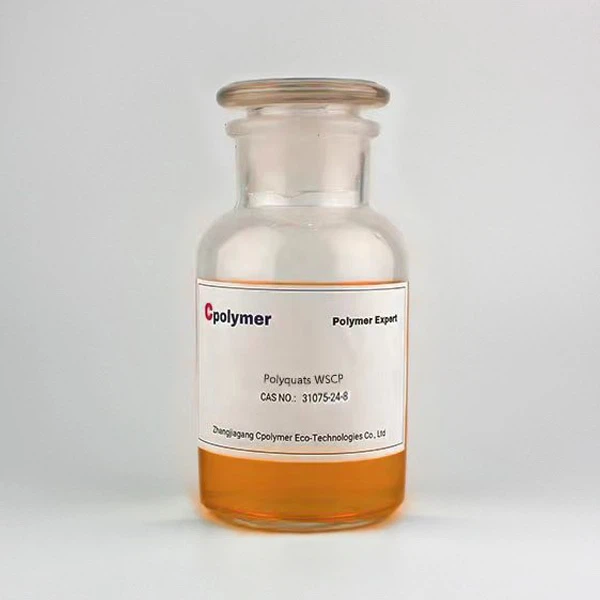
There are several other cationic polymers that are commonly used in the paper industry, such as Polyquats WSCP, Poly Acrylamide Co Diallyldimethylammonium Chloride, and Polyamine.
Polyquats WSCP
Polyquats WSCP is known for its high charge density and good solubility. It is often used as a retention and drainage aid in the paper industry. Compared to polyquats WSCP, polixetonium chloride may have different charge distribution and molecular weight, which could affect its performance in the paper - making process.
Poly Acrylamide Co Diallyldimethylammonium Chloride
This polymer is a copolymer that combines the properties of polyacrylamide and diallyldimethylammonium chloride. It is widely used as a flocculant and retention aid in the paper industry. Polixetonium chloride may offer different advantages in terms of its chemical stability and interaction with the paper - making system.
Polyamine
Polyamine is a cationic polymer that is commonly used as a wet - strength agent in the paper industry. It can improve the strength of paper when it is wet, which is important for applications such as tissue paper and packaging. Polixetonium chloride may have a different mechanism of action and could potentially offer complementary benefits in the paper - making process.
Challenges and Considerations
Compatibility with Other Chemicals
In the paper industry, multiple chemicals are used in the different processes. Polixetonium chloride needs to be compatible with other chemicals such as sizing agents, dyes, and biocides. Incompatibility can lead to issues such as precipitation, reduced performance, and poor paper quality.

Cost - Effectiveness
The cost of using polixetonium chloride in the paper industry needs to be considered. While it may offer certain benefits, the cost of the chemical and the associated processing costs need to be compared with the benefits gained, such as improved paper quality and increased production efficiency.
Environmental Impact
As with any chemical used in industry, the environmental impact of polixetonium chloride needs to be evaluated. It should be biodegradable or have a low environmental impact to meet the increasing environmental regulations in the paper industry.
Conclusion
In conclusion, polixetonium chloride has the potential to be used in the paper industry. Its cationic nature makes it suitable for applications such as retention aid, drainage aid, and strength agent. However, further research and development are needed to fully understand its performance in the complex paper - making system, to address the challenges such as compatibility and cost - effectiveness, and to ensure its environmental sustainability.
If you are interested in exploring the potential of polixetonium chloride for your paper manufacturing processes, I encourage you to contact me for further discussions and to start a procurement negotiation. I am confident that we can find a solution that meets your specific needs and requirements.
References
- "Handbook of Pulp and Paper Technology" by G. A. Smook.
- "Cationic Polymers in the Paper Industry" - Journal of Pulp and Paper Science.
- Research papers on the applications of cationic polymers in various industries.