

Are cationic polymer series resistant to abrasion?
As a supplier of cationic polymer series, I often receive inquiries from customers about the various properties of our products, and one question that comes up quite frequently is whether cationic polymer series are resistant to abrasion. In this blog post, I'll delve into this topic in detail, exploring the abrasion - resistance characteristics of cationic polymers, their relevant applications, and factors that influence their performance.
Understanding Cationic Polymers
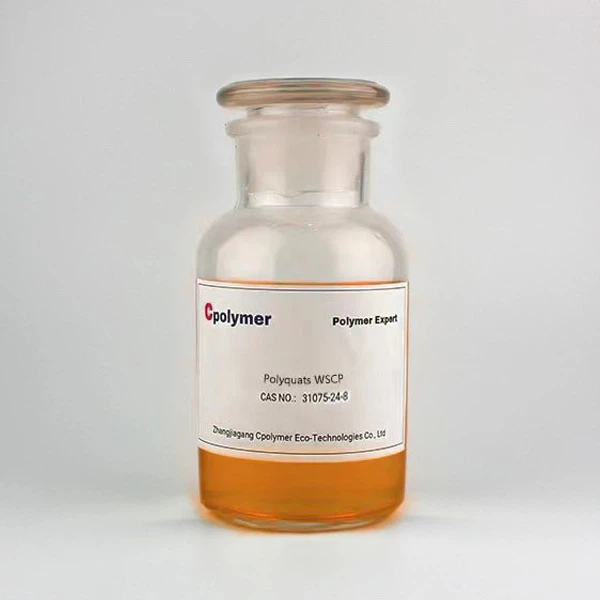
Cationic polymers are a class of polymers that carry a positive charge. They are widely used in different industries due to their unique chemical and physical properties. Our product range includes Polyamine, Polyquats WSCP, and Poly Dimethyl Diallyl Ammonium Chloride, each with its own set of features and applications.
Abrasion Resistance Mechanisms of Cationic Polymers
The abrasion resistance of cationic polymers can be attributed to several factors. Firstly, the molecular structure of cationic polymers plays a crucial role. These polymers often have long - chain molecules that can entangle with each other, forming a relatively dense and strong network structure. This network can effectively resist the mechanical forces exerted during abrasion. For example, in some coating applications, the cationic polymer forms a continuous film on the surface. The intermolecular forces within the polymer film, such as van der Waals forces and hydrogen bonds, contribute to its ability to withstand the friction and wear caused by external contact.
Secondly, the positive charge on cationic polymers allows them to interact with negatively charged surfaces. This interaction can lead to the formation of a stable adsorption layer on the surface, which acts as a protective barrier. In the case of using cationic polymers in textile finishing, the polymer can adsorb onto the fibers, reducing the direct contact between the fibers and the abrasive medium. As a result, the fibers are less likely to be damaged by abrasion, and the overall durability of the textile is improved.
Applications Based on Abrasion Resistance
Coating Industry
In the coating industry, abrasion resistance is a highly desired property. Cationic polymers are used in various types of coatings, such as automotive coatings, floor coatings, and industrial coatings. Automotive coatings need to withstand the friction from road debris, car washes, and environmental factors. Cationic polymers can enhance the hardness and toughness of the coating, preventing it from being easily scratched or worn off. Floor coatings, especially in high - traffic areas like shopping malls and factories, require good abrasion resistance. Cationic polymer - based floor coatings can provide a long - lasting and durable surface that can endure the constant foot traffic and the movement of heavy equipment.
Textile Industry
As mentioned earlier, cationic polymers are used in textile finishing to improve abrasion resistance. In the production of workwear, sportswear, and outdoor textiles, the ability to resist abrasion is essential. By treating the textiles with cationic polymers, the fibers become more resistant to the rubbing and friction that occur during normal use. This not only extends the lifespan of the textiles but also maintains their appearance and performance over time.
Paper Industry
In the paper industry, cationic polymers are used to improve the strength and abrasion resistance of paper products. When added to the paper - making process, these polymers can increase the bonding strength between the paper fibers. As a result, the paper is less likely to be damaged during handling, printing, and transportation. For example, in the production of packaging paper, the improved abrasion resistance ensures that the packages can withstand the rough handling during shipping without tearing or getting damaged.
Factors Affecting Abrasion Resistance
Polymer Concentration
The concentration of cationic polymers in a formulation can significantly affect their abrasion - resistance performance. If the concentration is too low, there may not be enough polymer molecules to form a continuous and effective protective layer. On the other hand, an excessively high concentration may lead to issues such as poor dispersion and increased viscosity, which can also have a negative impact on the overall performance. Therefore, finding the optimal polymer concentration is crucial for achieving the best abrasion - resistance results.
Molecular Weight
The molecular weight of cationic polymers is another important factor. Generally, polymers with higher molecular weights tend to have better abrasion resistance. Higher - molecular - weight polymers have longer chains and stronger intermolecular interactions, which can form a more robust network structure. However, very high - molecular - weight polymers may also have poor solubility and processability, so a balance needs to be struck between molecular weight and other properties.
Environmental Conditions
The environmental conditions in which the cationic polymers are used also play a role in their abrasion resistance. Temperature, humidity, and the presence of chemicals can all affect the performance of the polymers. For instance, in a high - humidity environment, the water molecules can plasticize the polymer, reducing its hardness and abrasion resistance. Chemicals such as acids, alkalis, and solvents may also react with the cationic polymers, altering their molecular structure and thus affecting their ability to resist abrasion.
Testing Abrasion Resistance
To accurately evaluate the abrasion resistance of cationic polymers, various testing methods are available. One common method is the Taber abrasion test. In this test, a specimen coated with the cationic polymer is subjected to a rotating abrasive wheel under a specific load. The amount of material loss after a certain number of rotations is measured, and this loss is used as an indicator of the abrasion resistance of the polymer. Another method is the Martindale abrasion test, which is often used for textile and fabric materials. In this test, the specimen is rubbed against a standard abrasive fabric in a multi - directional motion, and the change in appearance and weight of the specimen is monitored to assess its abrasion resistance.
Conclusion
In conclusion, cationic polymer series generally exhibit good abrasion resistance, which is due to their unique molecular structure and the ability to interact with surfaces. Their applications in different industries, such as coating, textile, and paper, demonstrate their effectiveness in enhancing the durability of products. However, the abrasion - resistance performance can be influenced by factors such as polymer concentration, molecular weight, and environmental conditions. By carefully selecting the appropriate cationic polymer and optimizing the formulation and application conditions, we can achieve the best abrasion - resistance results.

If you are interested in our cationic polymer series products and want to discuss how they can meet your specific abrasion - resistance requirements, please feel free to contact us for procurement and further technical consultations.
References
- Brown, J. M. (2015). Polymer Science: A Comprehensive Introduction. Oxford University Press.
- Smith, R. A. (2018). Coatings Technology Handbook. McGraw - Hill Education.
- Jones, S. L. (2020). Textile Chemistry and Technology. Elsevier.