

Hey there! As a supplier of Polyquats WSCP, I often get asked about how this amazing product works on biofilms. So, I thought I'd take a moment to break it down for you in a way that's easy to understand.
First off, let's talk about what biofilms are. Biofilms are slimy, sticky communities of microorganisms like bacteria, fungi, and algae that attach themselves to surfaces. They can form on just about anything - from medical devices and pipes to teeth and even rocks in a stream. These biofilms are a real pain in the neck because they're super resistant to antibiotics and other traditional cleaning methods. They can cause all sorts of problems, like infections in hospitals, clogging in pipes, and damage to industrial equipment.
Now, let's get into the nitty - gritty of how Polyquats WSCP comes into play. Polyquats WSCP is a type of cationic polymer. Cationic polymers are positively charged molecules, and this positive charge is the key to their effectiveness against biofilms.
The first step in the mode of action of Polyquats WSCP on biofilms is adsorption. Biofilms are usually negatively charged due to the presence of extracellular polymeric substances (EPS) that they produce. These EPS are made up of things like polysaccharides, proteins, and nucleic acids, which carry negative charges. Since Polyquats WSCP is positively charged, it's attracted to the negatively charged biofilm like a magnet. It quickly adsorbs onto the surface of the biofilm, forming a sort of coating.
Once Polyquats WSCP has adsorbed onto the biofilm surface, it starts to disrupt the biofilm's structure. The positive charges of Polyquats WSCP interact with the negatively charged components of the EPS. This interaction weakens the bonds between the EPS molecules, causing the biofilm matrix to start breaking down. As the matrix breaks down, the individual microorganisms that make up the biofilm become more exposed.
Another important aspect of Polyquats WSCP's action is its ability to penetrate the biofilm. After it has started to disrupt the matrix, it can move deeper into the biofilm. Once inside, it can directly interact with the microorganisms. Polyquats WSCP can damage the cell membranes of the bacteria, fungi, or algae in the biofilm. The positive charges of the polymer can disrupt the normal function of the cell membrane, which is essential for the survival of the microorganism. This disruption can lead to the leakage of cellular contents, ultimately causing the death of the microorganism.
In addition to killing the microorganisms, Polyquats WSCP also has a role in preventing the re - formation of biofilms. Once a biofilm has been removed, the surface is often still prone to new biofilm growth. Polyquats WSCP can remain on the surface after the cleaning process. Its positive charge creates an environment that is unfavorable for the initial attachment of new microorganisms. So, it acts as a sort of preventive shield, keeping the surface clean and free from biofilm for longer periods.
Now, let's compare Polyquats WSCP with some other related products. There are other cationic polymers in the market, like Polyamine and Poly Allylamine Hydrochloride. While these polymers also have antibacterial and biofilm - disrupting properties, Polyquats WSCP has some unique advantages.
Polyquats WSCP has a more stable structure compared to some other cationic polymers. This stability allows it to maintain its positive charge and effectiveness over a wider range of environmental conditions, such as different pH levels and temperatures. It also has a higher affinity for biofilms, which means it can adsorb more effectively and penetrate deeper into the biofilm matrix.
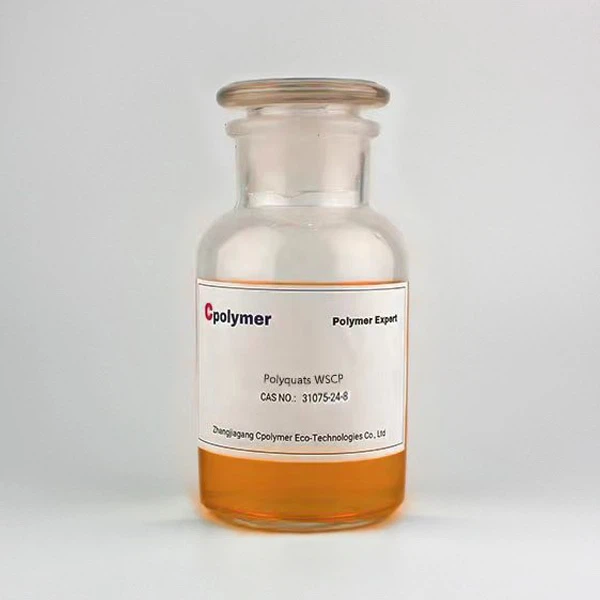

One of the great things about Polyquats WSCP is its versatility. It can be used in a variety of industries. In the healthcare industry, it can be used to clean and disinfect medical devices, reducing the risk of biofilm - related infections. In the food and beverage industry, it can be used to clean equipment and surfaces, preventing the growth of harmful biofilms that could contaminate the products. In the water treatment industry, it can be used to control biofilm growth in pipes and water systems, ensuring the quality and safety of the water supply.
If you're in an industry that struggles with biofilm problems, Polyquats WSCP might just be the solution you've been looking for. It offers a powerful and effective way to not only remove existing biofilms but also prevent their re - growth.
I know you might be thinking, "This sounds great, but how do I get my hands on it?" Well, that's where we come in. As a supplier of Polyquats WSCP, we're here to help you out. Whether you need a small sample to test its effectiveness in your specific application or a large - scale supply for your business, we've got you covered.
If you're interested in learning more about how Polyquats WSCP can work for you, or if you want to discuss your specific biofilm - control needs, don't hesitate to reach out. We're always happy to have a chat and see how we can help you solve your biofilm problems.
In conclusion, Polyquats WSCP is a game - changer when it comes to dealing with biofilms. Its unique mode of action, combined with its stability and versatility, makes it a top choice for industries looking to combat biofilm - related issues. So, why not give it a try and see the difference it can make in your operations?
References
- Costerton, J. W., Stewart, P. S., & Greenberg, E. P. (1999). Bacterial biofilms: a common cause of persistent infections. Science, 284(5418), 1318 - 1322.
- Donlan, R. M., & Costerton, J. W. (2002). Biofilms: survival mechanisms of clinically relevant microorganisms. Clinical microbiology reviews, 15(2), 167 - 193.