

Hey there! As a supplier of Polyquats WSCP, I've had the chance to see firsthand how this product can be a game - changer in various industries. In this blog, I'm gonna share some of the best practices for using Polyquats WSCP.
Understanding Polyquats WSCP
First off, let's get a basic understanding of what Polyquats WSCP is. It's a type of cationic polymer that has a wide range of applications. You can learn more about it on the Polyquats WSCP page. This polymer is known for its excellent performance in water treatment, papermaking, and other industrial processes.
Best Practices in Water Treatment
One of the most common uses of Polyquats WSCP is in water treatment. When it comes to water treatment, the key is to get the dosage right. You don't want to add too much or too little of the product. A good starting point is to conduct a small - scale test. Take a sample of the water you want to treat and add different amounts of Polyquats WSCP. Observe how the water quality changes, like the reduction of turbidity or the removal of certain contaminants.
Another important aspect is the mixing process. Make sure to mix the Polyquats WSCP thoroughly with the water. You can use a mechanical stirrer or a pump to ensure proper dispersion. If the mixing is not done well, the polymer might not work effectively, and you won't get the desired results.
In water treatment plants, it's also crucial to monitor the water quality continuously. Keep an eye on parameters such as pH, temperature, and the concentration of contaminants. These factors can affect how well Polyquats WSCP works. For example, if the pH of the water is too high or too low, it might reduce the effectiveness of the polymer. Adjust the dosage or other treatment parameters accordingly.
Applications in Papermaking
In the papermaking industry, Polyquats WSCP plays a vital role. It can improve the strength and quality of the paper. When using it in papermaking, the timing of addition is important. You should add Polyquats WSCP at the right stage of the papermaking process. Usually, it's added during the wet - end process. This allows the polymer to interact with the fibers and other additives in the paper pulp.
The compatibility with other chemicals used in papermaking is also something to consider. Polyquats WSCP should be compatible with sizing agents, retention aids, and other additives. If there's a compatibility issue, it can lead to problems like poor paper quality or equipment fouling. So, before using Polyquats WSCP in a large - scale papermaking operation, conduct compatibility tests with all the other chemicals you plan to use.
Another tip is to control the dosage based on the type of paper you're making. Different types of paper, such as newsprint, packaging paper, or high - quality printing paper, have different requirements. For example, for high - quality printing paper, you might need a more precise dosage to ensure a smooth surface and good printability.
Comparison with Other Cationic Polymers
It's worth comparing Polyquats WSCP with other cationic polymers like Poly Allylamine Hydrochloride and Polyamine. Each of these polymers has its own advantages and disadvantages.
Poly Allylamine Hydrochloride is known for its high reactivity. It can react quickly with certain contaminants in water or other substances. However, it might be more expensive than Polyquats WSCP in some cases. Polyamine, on the other hand, has good flocculation properties. But it might not be as effective as Polyquats WSCP in some specific applications, like in certain water treatment scenarios where Polyquats WSCP can provide better turbidity removal.
When choosing between these polymers, consider your specific needs. If you need a polymer for a short - term, high - reactivity application, Poly Allylamine Hydrochloride might be a good choice. But if you're looking for a cost - effective and versatile option for long - term use, Polyquats WSCP could be the way to go.
Storage and Handling
Proper storage and handling of Polyquats WSCP are essential. Store it in a cool, dry place. Avoid exposing it to direct sunlight or extreme temperatures. High temperatures can cause the polymer to degrade, reducing its effectiveness.
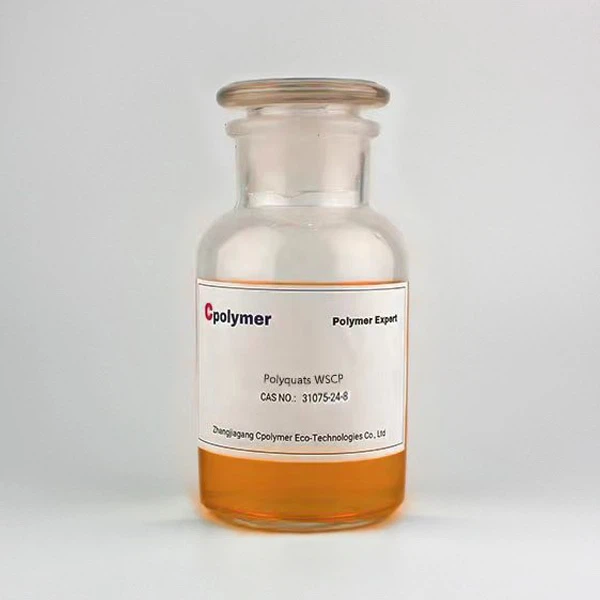

When handling Polyquats WSCP, wear appropriate protective equipment, such as gloves and goggles. Although it's generally safe to use, it's always better to take precautions. If the polymer comes into contact with your skin or eyes, rinse it off immediately with plenty of water.
Safety Considerations
Safety should always be a top priority. When using Polyquats WSCP, make sure to follow all the safety guidelines. Read the product label carefully. It will provide information about any potential hazards and how to handle the product safely.
In case of accidental spills, clean it up immediately. Use absorbent materials to soak up the spilled polymer. Dispose of the contaminated materials properly according to local regulations.
Troubleshooting
Sometimes, you might encounter problems when using Polyquats WSCP. For example, if you don't see the expected improvement in water quality or paper quality, there could be several reasons. It could be due to incorrect dosage, poor mixing, or compatibility issues with other chemicals.
If you suspect an incorrect dosage, re - evaluate your testing process. You might need to adjust the amount of Polyquats WSCP you're using. If the mixing is the problem, check your mixing equipment and make sure it's working properly.
In case of compatibility issues, try to identify the incompatible chemical and find an alternative or adjust the treatment process. You can also consult with our technical support team for more in - depth troubleshooting.
Conclusion
In conclusion, Polyquats WSCP is a versatile and effective cationic polymer with many applications. By following these best practices, you can make the most of this product. Whether you're in the water treatment or papermaking industry, or other fields where cationic polymers are used, proper use of Polyquats WSCP can lead to significant improvements in product quality and process efficiency.
If you're interested in purchasing Polyquats WSCP or have any questions about its use, feel free to reach out. We're here to help you with your specific needs and ensure that you get the best results from our product.
References
- Industry reports on cationic polymers in water treatment
- Technical documents on the use of Polyquats WSCP in papermaking
- Research studies on the performance of different cationic polymers