

Is Polixetonium Chloride a Natural or Synthetic Compound?
Hey there! I'm a supplier of polixetonium chloride, and I often get asked this question: Is polixetonium chloride a natural or synthetic compound? Well, let's dive right into it and find out.
First off, let's understand what polixetonium chloride is. It's a type of chemical compound that has a wide range of applications, especially in the field of water treatment and personal care products. It's known for its excellent properties like being a good disinfectant and having great conditioning effects.
Now, to answer the big question: Polixetonium chloride is a synthetic compound. It's not something that you'll find just lying around in nature. It's created through a series of chemical reactions in a laboratory or an industrial setting. Scientists and chemists use specific raw materials and follow precise procedures to synthesize this compound.
The process of making polixetonium chloride involves combining different chemical substances under controlled conditions. This is done to ensure that the final product has the desired properties and quality. For example, it might involve reacting certain organic compounds with chloride ions to form the polixetonium chloride molecule.
One of the reasons why it's synthetic is that its structure is very specific and designed to have certain functions. Natural compounds usually have a more diverse and complex structure that has evolved over time in nature. In contrast, polixetonium chloride is engineered to have consistent and predictable properties, which is very important for its applications.
In the water treatment industry, polixetonium chloride is used as a coagulant and flocculant. It helps to remove impurities and suspended particles from water by causing them to clump together and settle out. This is crucial for providing clean and safe drinking water. If it were a natural compound, it might not have the same level of effectiveness and consistency in treating water.

In personal care products, like shampoos and conditioners, polixetonium chloride is used as a conditioning agent. It helps to make hair smoother, softer, and more manageable. Again, its synthetic nature allows it to be formulated in a way that provides these specific benefits.
Now, some people might have concerns about using synthetic compounds. But the good news is that polixetonium chloride has been extensively tested for safety. It meets all the regulatory requirements and standards for use in various industries. It's important to note that just because it's synthetic doesn't mean it's harmful. In fact, many synthetic compounds have been developed to improve our lives and solve real - world problems.
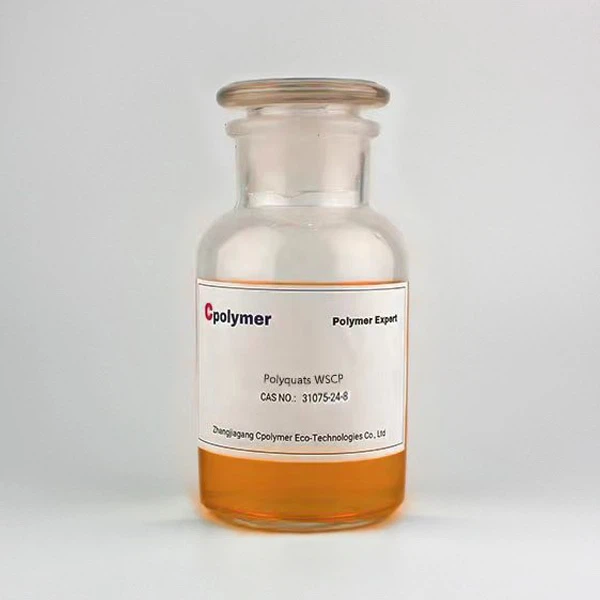
Let's talk a bit about some related compounds. There are other similar cationic polymers like Polyamine and Polyquats WSCP. These are also synthetic compounds and are often used in similar applications. Polyamine is another type of cationic polymer that can be used in water treatment and other industrial processes. It has its own unique properties and advantages, but like polixetonium chloride, it's also a result of chemical synthesis.
If you're in the market for polixetonium chloride, whether it's for water treatment, personal care product manufacturing, or other applications, I'm here to help. As a supplier, I can offer you high - quality polixetonium chloride at competitive prices. We have a strict quality control system in place to ensure that every batch of our product meets the highest standards.
If you're interested in learning more about our polixetonium chloride or would like to start a procurement discussion, don't hesitate to reach out. I'm always happy to answer your questions and provide you with the information you need to make an informed decision. Whether you're a small business or a large corporation, we can work together to meet your specific requirements.
In conclusion, polixetonium chloride is a synthetic compound that offers many benefits in different industries. Its synthetic nature allows for precise control over its properties and performance. So, if you're looking for a reliable and effective solution for your water treatment or personal care product needs, polixetonium chloride could be the answer.
References
- Textbooks on polymer chemistry and water treatment technology.
- Research papers on the applications of cationic polymers in various industries.