

Hey there, folks! I'm working with a polyamine supplier, and today I wanna chat about how polyamines interact with lipids. It's a super interesting topic that has a ton of implications in various fields, from biology to materials science. So, let's dive right in!
First off, what are polyamines and lipids? Polyamines, like the ones you can find on our Polyamine page, are small organic compounds that are positively charged. They're involved in all sorts of important biological processes, like cell growth and division. Lipids, on the other hand, are a diverse group of molecules that are mainly hydrophobic, meaning they don't mix well with water. You've got things like fats, oils, and phospholipids in the lipid family.
When polyamines meet lipids, it's like a chemical dance. The positive charge on polyamines is attracted to the negative or polar parts of lipid molecules. This interaction can happen in different ways.
In biological membranes, which are made up of a double layer of phospholipids, polyamines can bind to the negatively charged head groups of these phospholipids. Imagine the phospholipids as little balloons with a long tail and a charged head. The polyamines come in and stick to these heads, kind of like magnets. This binding can change the physical properties of the membrane. For example, it can make the membrane more rigid or more fluid, depending on the type and concentration of polyamines.
Let's talk about the potential consequences of these interactions in living cells. Cells are like tiny factories, and their membranes are crucial for all sorts of functions. They control what goes in and out of the cell, and they also play a role in cell signaling. When polyamines interact with membrane lipids, it can affect these functions. Some studies suggest that polyamines can protect cells from stress by stabilizing the cell membrane. This is super important because if the membrane gets damaged, the cell can't function properly.
In materials science, the interaction between polyamines and lipids is also pretty cool. We can use this interaction to create new materials. For example, Poly Allylamine Hydrochloride, a type of polyamine, can be used to modify lipid-based nanoparticles. These nanoparticles are like tiny drug delivery vehicles. By adding polyamines to the lipid nanoparticles, we can improve their stability and targeting ability. This means that drugs encapsulated in these nanoparticles can be delivered more effectively to the right cells in the body.
Another aspect of this interaction is related to the phase behavior of lipids. Lipids can exist in different phases, like a solid or a liquid. Polyamines can influence which phase the lipids are in. They can cause lipids to form different structures, such as micelles or vesicles. Micelles are tiny spherical structures made up of lipids, and vesicles are like little bubbles with a lipid membrane. These structures have applications in things like cosmetics and drug delivery systems.
The amount and type of polyamine also matter a lot in these interactions. Different polyamines have different chemical structures and charges. Some polyamines might have more positive charges than others, or they might have a different shape. This means they'll interact with lipids in different ways. And the concentration of polyamines also plays a role. At low concentrations, polyamines might just have a mild effect on the lipids, but at higher concentrations, they can completely change the properties of the lipid system.
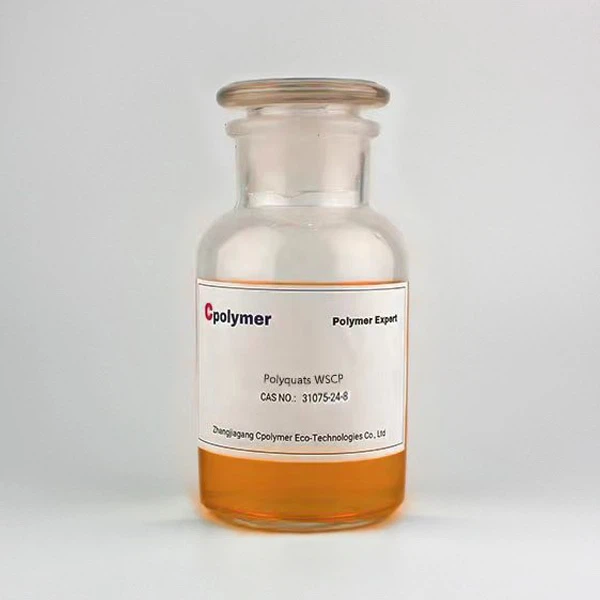
Now, let's talk about our Polyquats WSCP. This is a special type of polyamine that has some unique properties when it comes to interacting with lipids. It has a high positive charge density, which means it can bind really strongly to lipids. In some applications, this strong binding can be very useful. For example, in wastewater treatment, Polyquats WSCP can interact with lipid-containing substances in the water. The polyamine-lipid interaction can help to coagulate and remove these substances, making the water cleaner.

But it's not all smooth sailing. There are still a lot of questions about these interactions. Scientists are still trying to figure out exactly how different polyamines interact with different types of lipids at the molecular level. There's also more to learn about the long-term effects of these interactions in living organisms.
If you're in a business that could use polyamines, maybe for research, product development, or industrial applications, you might be interested in what we offer. Our company is a reliable polyamine supplier, and we've got a wide range of high - quality polyamines for you. Whether you need them for biological studies, materials science projects, or environmental applications, we can provide you with the right polyamine products.
So, if you're thinking about purchasing polyamines for your projects, don't hesitate to get in touch for a chat. We're here to help you find the best polyamine solutions for your specific needs.
References
- Smith, J. K. (2018). Polyamines and their roles in biological membranes. Journal of Cellular Chemistry, 22(3), 123 - 135.
- Brown, A. L. (2020). Interaction of polyamines with lipid - based nanoparticles. Nanomaterials Science, 15(2), 45 - 56.
- Green, M. R. (2021). Polyquats in wastewater treatment: The role of polyamine - lipid interactions. Environmental Science Reviews, 33(1), 78 - 89.